8 Best Festivals in Thailand You Should Experience at Least Once
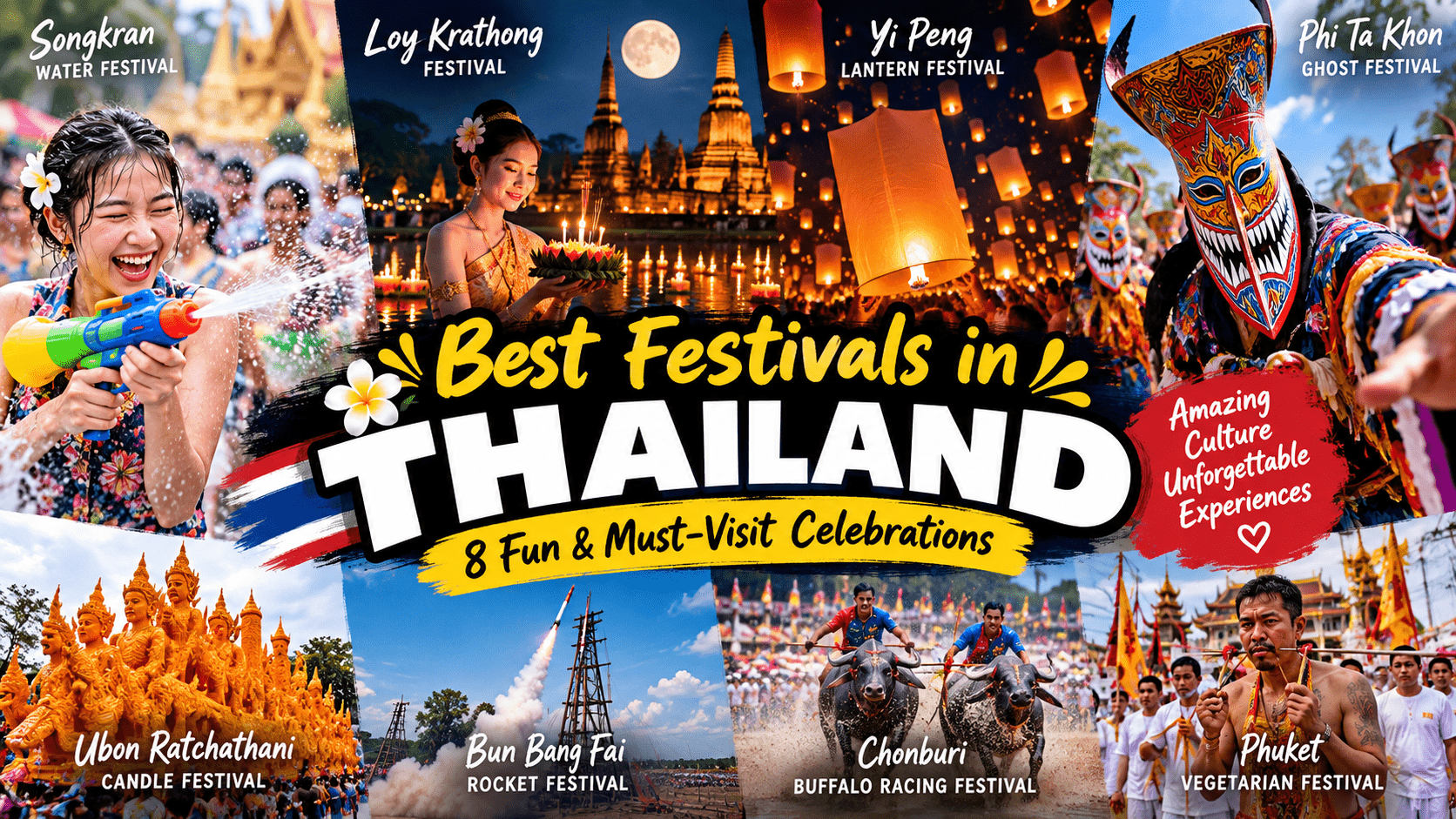
Thailand is exciting at almost any time of year, but visiting during a traditional Thai festival can turn a normal holiday into an unforgettable experience.
You might find yourself having a water fight in the middle of Bangkok, watching thousands of lights glow beside an ancient temple, seeing colourful ghost masks dancing through a small town, or admiring enormous hand-carved candle sculptures moving through the streets.
Thai festivals are not only about entertainment. Many are connected to Buddhism, local beliefs, agriculture, history and community traditions that have been passed from generation to generation.
If you are planning a trip and wondering which festivals in Thailand are worth travelling for, these are eight celebrations that should be on your list.
Thailand Festival Calendar at a Glance
| Festival | Usually Held | Best Places to Visit |
|---|---|---|
| Songkran Festival | 13–15 April | Bangkok, Chiang Mai, Khon Kaen |
| Bun Bang Fai Rocket Festival | May | Yasothon and Northeast Thailand |
| Phi Ta Khon Festival | Usually June or July | Dan Sai, Loei |
| Ubon Candle Festival | Usually July | Ubon Ratchathani |
| Phuket Vegetarian Festival | September or October | Phuket |
| Chonburi Buffalo Racing Festival | Usually October | Chonburi |
| Loy Krathong Festival | Usually November | Sukhothai, Bangkok, Ayutthaya |
| Yi Peng Lantern Festival | Usually November | Chiang Mai and Northern Thailand |
1. Songkran Festival – Thailand's Biggest Water Festival

If there is one Thai festival that international travellers recognise immediately, it is Songkran.
Songkran marks the traditional Thai New Year and is officially celebrated around 13–15 April.
Across Thailand, streets become giant water-fighting zones where locals and visitors spray each other using buckets, hoses and colourful water guns.
Bangkok becomes especially lively around areas such as Silom and Khao San Road, while Chiang Mai is famous for celebrations around the Old City.
But Songkran is much more than a giant water fight.
Traditionally, water represents cleansing and a fresh beginning. Families may visit temples, make merit, gently pour scented water over Buddha images and show respect to older relatives.
Why You Should Visit Songkran
Songkran is one of the easiest Thai festivals for international visitors to join because you do not simply watch the celebration. You become part of it.
2. Loy Krathong – Thailand's Festival of Lights

For something much calmer and more romantic, Loy Krathong is one of Thailand's most beautiful traditional celebrations.
The festival normally takes place on the full moon of the twelfth lunar month, usually during November.
People create small floating vessels called krathongs, traditionally made using natural materials such as banana leaves, flowers, candles and incense.
These are gently placed onto rivers, ponds and canals as people make wishes and take part in the celebration.
The tradition is commonly associated with gratitude towards water and asking forgiveness for the ways people use and affect waterways.
Some of the most impressive celebrations take place in Sukhothai, where lights, candles and traditional performances create a beautiful atmosphere around the historic temples.
Bangkok, Ayutthaya, Tak and many other provinces also hold their own Loy Krathong celebrations.
Why You Should Visit Loy Krathong
If Songkran shows Thailand at its most energetic, Loy Krathong shows a quieter and more graceful side of Thai culture.
3. Yi Peng Lantern Festival – A Magical Night in Northern Thailand

Photos of hundreds of glowing lanterns floating through a dark sky have become one of the most famous images associated with travelling in Thailand.
This northern Thai celebration is known as Yi Peng and is closely connected with traditional Lanna culture.
It generally takes place around the same period as Loy Krathong in November, especially in Chiang Mai and other parts of Northern Thailand.
Traditional celebrations include decorative lanterns around temples and communities, religious activities and cultural performances.
Lantern traditions can carry Buddhist meanings connected with merit-making, light, prosperity and leaving difficulties behind.
Travellers should understand that large sky-lantern releases are controlled because lanterns can create fire and aviation risks.
Releases may therefore only be allowed at specific locations and times.
Why You Should Visit Yi Peng
Northern Thailand already has a distinctive culture, architecture and atmosphere. Visiting during Yi Peng gives travellers an opportunity to experience that Lanna identity at one of the most visually beautiful times of the year.
4. Phi Ta Khon – Thailand's Colourful Ghost Festival

One of Thailand's most unusual festivals happens far away from the country's major tourist centres.
Every year, the district of Dan Sai in Loei Province becomes filled with people wearing large colourful masks, bright costumes and bells during the famous Phi Ta Khon Festival.
The tradition forms part of the local Bun Luang celebration and combines Buddhist traditions, community beliefs and folklore.
Phi Ta Khon masks are often beautifully painted with colourful patterns and dramatic expressions.
During the festival, masked participants dance through the streets while visitors enjoy parades, local performances and community activities.
Why You Should Visit Phi Ta Khon
Phi Ta Khon feels completely different from Bangkok or Thailand's island destinations.
It is a great choice for travellers who want to experience a distinctive regional culture and one of Thailand's most photogenic festivals.
5. Bun Bang Fai – Thailand's Rocket Festival

Yes, Thailand has a festival where communities launch enormous homemade rockets into the sky.
Known as Bun Bang Fai, the Rocket Festival is strongly associated with communities in Northeast Thailand, particularly Yasothon.
The festival traditionally takes place before the rainy farming season and is connected to beliefs about asking for rain and agricultural prosperity.
Communities prepare rockets, organise colourful processions, play music and celebrate before the rockets are eventually launched.
The atmosphere is usually loud, energetic and very different from the calm elegance of festivals such as Loy Krathong.
Why You Should Visit Bun Bang Fai
Bun Bang Fai gives travellers a fascinating look at Isan culture and the relationship between traditional beliefs, farming and community celebration.
6. Ubon Ratchathani Candle Festival – Incredible Thai Art in Wax

Around the beginning of Buddhist Lent, Ubon Ratchathani hosts one of Thailand's most impressive religious and artistic festivals.
The Ubon Ratchathani Candle Festival developed from the Buddhist tradition of offering candles for monks during the rainy-season retreat.
Over time, communities began creating increasingly elaborate candles and wax sculptures.
Today, enormous carved wax works travel through the streets during spectacular processions accompanied by traditional dancers and performers.
Why You Should Visit the Ubon Candle Festival
The level of detail in the sculptures can be remarkable.
If you enjoy traditional art, craftsmanship, Buddhism or photography, this is one of the most interesting festivals in Thailand.
7. Phuket Vegetarian Festival – A Powerful Religious Tradition
Despite its name, the Phuket Vegetarian Festival is much more than a food festival.
The annual celebration is connected with Phuket's Chinese-Thai community and generally takes place during the ninth lunar month, usually in September or October.
During the festival, many participants follow vegetarian diets while shrines organise religious ceremonies and processions throughout Phuket.
Visitors will also find a huge variety of vegetarian street food across the island.
However, some religious rituals can be intense. Certain processions are known for acts of physical devotion and body piercing.
Why You Should Visit the Phuket Vegetarian Festival
The festival shows another side of Thailand's cultural diversity and the strong Chinese influence that has helped shape Phuket's identity.
8. Chonburi Buffalo Racing Festival – One of Thailand's Most Unusual Events
Thailand's local festivals can sometimes be wonderfully unexpected.
The Chonburi Buffalo Racing Festival, commonly known in Thai as Wing Kwai, celebrates an animal that historically played an important role in Thai agricultural life.
Buffaloes and their riders compete in exciting short-distance races while the wider festival may include local food, markets, cultural activities and entertainment.
The festival is particularly interesting because it connects modern entertainment with Thailand's agricultural heritage.
Why You Should Visit the Chonburi Buffalo Racing Festival
Chonburi is relatively easy to reach from Bangkok, making this one of the more accessible regional festivals for travellers who want to experience something different from Thailand's biggest tourist celebrations.
Which Thailand Festival Should You Choose?
Every festival offers a very different experience.
If you want the biggest party, choose Songkran.
If you want beautiful lights and a peaceful atmosphere, choose Loy Krathong.
If photography is your priority, Yi Peng and Phi Ta Khon are especially memorable.
For traditional art and Buddhism, consider the Ubon Ratchathani Candle Festival.
Travellers interested in local culture away from Thailand's most famous tourist routes may particularly enjoy Bun Bang Fai or Phi Ta Khon.
If unusual local experiences are what you are searching for, the Chonburi Buffalo Racing Festival is certainly something different.
Tips for Visiting Festivals in Thailand
Festival periods can become extremely busy, particularly Songkran, Loy Krathong and major celebrations in Chiang Mai.
Book hotels and domestic transport early once official dates have been confirmed.
Remember that many Thai festivals are connected with Buddhism, temples or traditional religious beliefs.
Dress respectfully when visiting temples, follow instructions from organisers and ask before photographing people taking part in private or religious ceremonies.
For festivals involving crowds, water, fire, lanterns or rockets, stay within official event areas rather than trying to recreate activities independently.
When Is the Best Time to Visit Thailand for Festivals?
There is no single best month because Thailand's festivals are spread throughout the year.
April is perfect for travellers who want the energy and excitement of Songkran.
May to July is a good period for travellers interested in regional festivals such as Bun Bang Fai, Phi Ta Khon and the Ubon Candle Festival.
October and November offer several unique cultural celebrations, including the Phuket Vegetarian Festival, buffalo racing, Loy Krathong and Yi Peng.
If festivals are an important part of your Thailand trip, try to decide which experience interests you most before choosing your travel dates.
Final Thoughts: Experience Thailand Beyond the Beaches
Thailand is famous for tropical islands, street food and beautiful temples, but its festivals show another side of the country.
They bring together history, religion, family, local identity, food, music, art and plenty of fun.
You can celebrate New Year while completely soaked during Songkran, watch candlelight reflect across the water during Loy Krathong, see giant ghost masks dancing through Loei or admire huge works of candle art in Ubon Ratchathani.
If your travel dates are flexible, planning your trip around one of these festivals in Thailand can turn a normal holiday into an experience you will remember long after you return home.
Sometimes the best memories in Thailand are not found at famous tourist attractions at all. They happen when an entire community comes together to celebrate.
Festival photographs used in this article are sourced from Wikimedia Commons. Individual image credits and licence information are included beneath each photograph.
For current festival dates and official travel information, check: Tourism Authority of Thailand .
Because many Thai festivals follow lunar calendars or local schedules, dates can change from year to year.