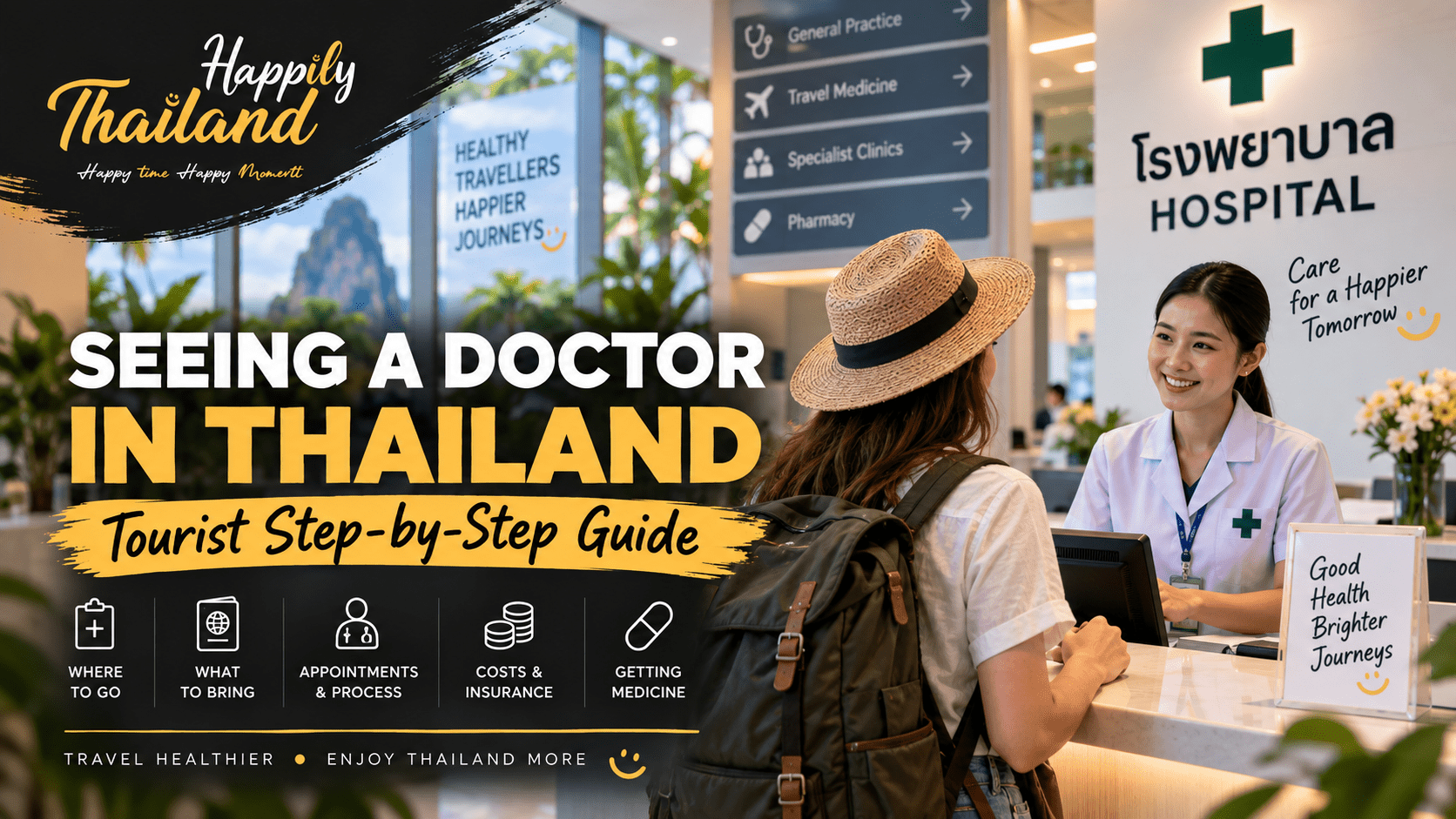
How to See a Doctor in Thailand as a Tourist: Step-by-Step Guide
Feeling unwell while travelling in Thailand? This practical guide explains where to go, what to bring, how appointments work, what you may need to pay and what to do in an emergency.
Yes. Tourists can visit hospitals and medical clinics in Thailand. You can use both public and private healthcare facilities, although you should normally expect to pay for treatment yourself or use travel insurance.
Getting sick or injured during a holiday is never part of the plan, but finding medical care in Thailand is generally quite straightforward.
Hospitals, clinics and pharmacies can be found throughout Thailand, especially in major cities and popular tourist destinations such as Bangkok, Chiang Mai, Phuket and Pattaya.
The best place to go depends on how serious your problem is, what type of treatment you need and whether you have travel insurance.
This guide explains the process step by step so you know what to expect if you need to see a doctor while visiting Thailand.
Step 1: Decide Whether It Is an Emergency
The first thing to consider is whether you need routine medical care or urgent emergency treatment.
If you are experiencing a serious or potentially life-threatening medical emergency, seek emergency care immediately.
Thailand's Tourist Police currently lists 1669 for emergency medical services, 191 for police emergencies and 1155 for the Tourist Police hotline.
For a minor illness, injury or non-urgent health problem, you can usually visit a clinic or hospital instead.
Step 2: Choose a Clinic, Public Hospital or Private Hospital
Tourists in Thailand generally have three main options for seeing a doctor.
Medical Clinic
A local clinic may be suitable for relatively straightforward, non-emergency concerns. Clinics can be convenient because they are often smaller and easier to access than a large hospital.
Public Hospital
Thailand has an extensive public hospital system. Public hospitals can provide both general and specialist medical care and are generally less expensive than private hospitals, although waiting times and English-language support can vary.
Private Hospital
Private hospitals are commonly used by international visitors. Larger private hospitals in tourist destinations often have international patient departments, English-speaking staff and support for insurance paperwork.
| Option | Best For | What to Expect |
|---|---|---|
| Clinic | Minor or straightforward health concerns | Smaller facility and often convenient |
| Public Hospital | General and specialist healthcare | Usually lower cost but potentially longer waiting times |
| Private Hospital | Visitors wanting convenient international support | Usually higher cost with more English-language support |
Step 3: Check Whether You Need an Appointment
Whether you need an appointment will depend on the healthcare facility and the type of treatment you need.
Many hospitals and clinics can accept patients without a previous appointment for general medical care, but specialist clinics, health checks and certain services may operate by appointment.
If your condition is not urgent, contacting the hospital or clinic before visiting can save time.
Search for the hospital's official website or call its international patient department before visiting. You can ask about opening times, appointments, English-speaking services and approximate consultation fees.
Step 4: Bring Your Passport and Insurance Information
When visiting a hospital or clinic, it is useful to bring information that will help staff register and treat you efficiently.
- Your passport or another accepted form of identification
- Travel insurance information
- Your insurer's emergency contact number
- A list of medications you currently take
- Information about important allergies
- Relevant medical documents if you have an existing condition
Individual hospitals may have different registration requirements, so always follow the instructions provided by the facility.
Step 5: Register at the Hospital or Clinic
When you arrive, go to the registration or information desk.
If the hospital has an international patient department, you may be directed there.
Staff will normally create or locate your patient record and ask what type of medical assistance you need.
You may then be directed to a general doctor, specialist department or emergency department depending on your situation.
Step 6: See the Doctor
During your consultation, explain your symptoms, when they started and any relevant medical history.
The doctor may recommend an examination, medication, laboratory testing, imaging or referral to a specialist depending on your situation.
If you do not understand the proposed treatment or cost, ask questions before continuing whenever the situation allows.
What If You Don't Speak Thai?
Language support varies between healthcare facilities.
Many doctors and staff members at large private hospitals in Bangkok and major tourist destinations can communicate in English. Some hospitals also provide interpreting services for international patients.
Smaller clinics and hospitals may have more limited English support.
It can help to keep important medical information written clearly on your phone, including:
- The name of any medical condition you have
- Medication names and dosages
- Known allergies
- Emergency contact details
Step 7: Pay for Your Treatment or Use Travel Insurance
Tourists should generally expect to pay for healthcare services in Thailand unless payment is covered through an applicable insurance arrangement.
Actual costs vary depending on the hospital, treatment, medicine, tests and other services you require.
If you have travel insurance, contact your insurance company as soon as reasonably possible.
Depending on the policy and hospital, the insurer may:
- Arrange direct billing with the hospital
- Ask you to pay first and claim reimbursement later
- Require approval before certain treatment
- Request supporting medical documents
If you may make an insurance claim, ask which documents you should keep.
- Receipts
- Itemised medical bills
- Medical reports
- Prescriptions
- Test results
- Medical certificates if required
How Much Does It Cost to See a Doctor in Thailand?
There is no standard tourist consultation price across Thailand.
Costs depend on several factors, including:
- Whether you choose a public or private hospital
- The hospital or clinic itself
- The doctor's speciality
- Diagnostic tests
- Medicine
- Procedures or treatment
- Hospital admission if required
Public healthcare facilities are generally less expensive than private hospitals, while large international private hospitals can cost considerably more.
For non-emergency treatment, asking about expected charges before proceeding can help you avoid surprises.
Can You Go to a Pharmacy Instead of a Doctor?
Thailand has many pharmacies, and a pharmacist may be able to help with some minor health concerns or advise whether you should see a doctor.
However, a pharmacy is not a replacement for medical assessment when you have a serious, worsening or unexplained health problem.
Do not assume that every medicine available in your home country has the same name, legal status or availability in Thailand.
What If You Need a Specialist?
Thailand has specialist medical departments covering many areas of healthcare.
Depending on the hospital, you may be able to book directly with a specialist or first see a general doctor who can refer you to the appropriate department.
If you know that you need a particular specialist, check the hospital's official website or contact the facility before travelling there.
Travel Medicine Clinics in Thailand
Thailand's Department of Disease Control maintains an official database of assessed travel medicine service units around the country.
Depending on the facility, services may include travel-health consultations, vaccinations, health checks, preventive medicines and medical certificates.
Find Official Travel Health Service Units
Quick Checklist: Seeing a Doctor in Thailand
- Decide whether your condition is an emergency.
- Choose a clinic, public hospital or private hospital.
- Check whether an appointment is needed.
- Bring your passport and insurance information.
- Tell the doctor about medication, allergies and medical conditions.
- Ask about costs if the treatment is not urgent.
- Keep receipts and medical documents for insurance.
Frequently Asked Questions
Can a Tourist Go to a Hospital in Thailand?
Yes. Foreign tourists can receive medical treatment at hospitals and clinics in Thailand.
Can I See a Doctor in Thailand Without an Appointment?
Many hospitals and clinics can accommodate patients without a previous appointment for general medical care, but availability varies. Specialist clinics and certain services may require an appointment.
Do I Need My Passport to See a Doctor in Thailand?
Hospitals may request identification during patient registration, so it is sensible to bring your passport or another form of identification accepted by the facility.
Do Doctors in Thailand Speak English?
Many doctors at larger hospitals and facilities that regularly treat international visitors communicate in English. Language support varies by location and healthcare provider.
Are Doctors Expensive in Thailand?
Costs vary considerably. Public hospitals are generally less expensive, while private and international hospitals tend to charge more. Tests, treatment and medication are normally additional to the consultation fee.
Can I Use Travel Insurance at a Thai Hospital?
Many travellers use insurance for healthcare in Thailand, but how payment works depends on your insurer, policy and hospital. Contact your insurer to confirm coverage and whether direct billing is available.
What Is Thailand's Medical Emergency Number?
Thailand's medical emergency number is 1669.
Read our complete guide covering hospitals, insurance, pharmacies, emergency services and healthcare for foreign visitors and residents.
Healthcare in Thailand for ForeignersFinal Thoughts
Seeing a doctor in Thailand as a tourist does not need to be complicated.
For most non-emergency situations, the process is simply choosing an appropriate clinic or hospital, registering as a patient, seeing the doctor and arranging payment or insurance.
Keeping your passport, insurance details and important medical information accessible can make the process much easier if you suddenly become unwell during your trip.
Hopefully you will never need this guide, but it is worth saving before travelling around Thailand.